
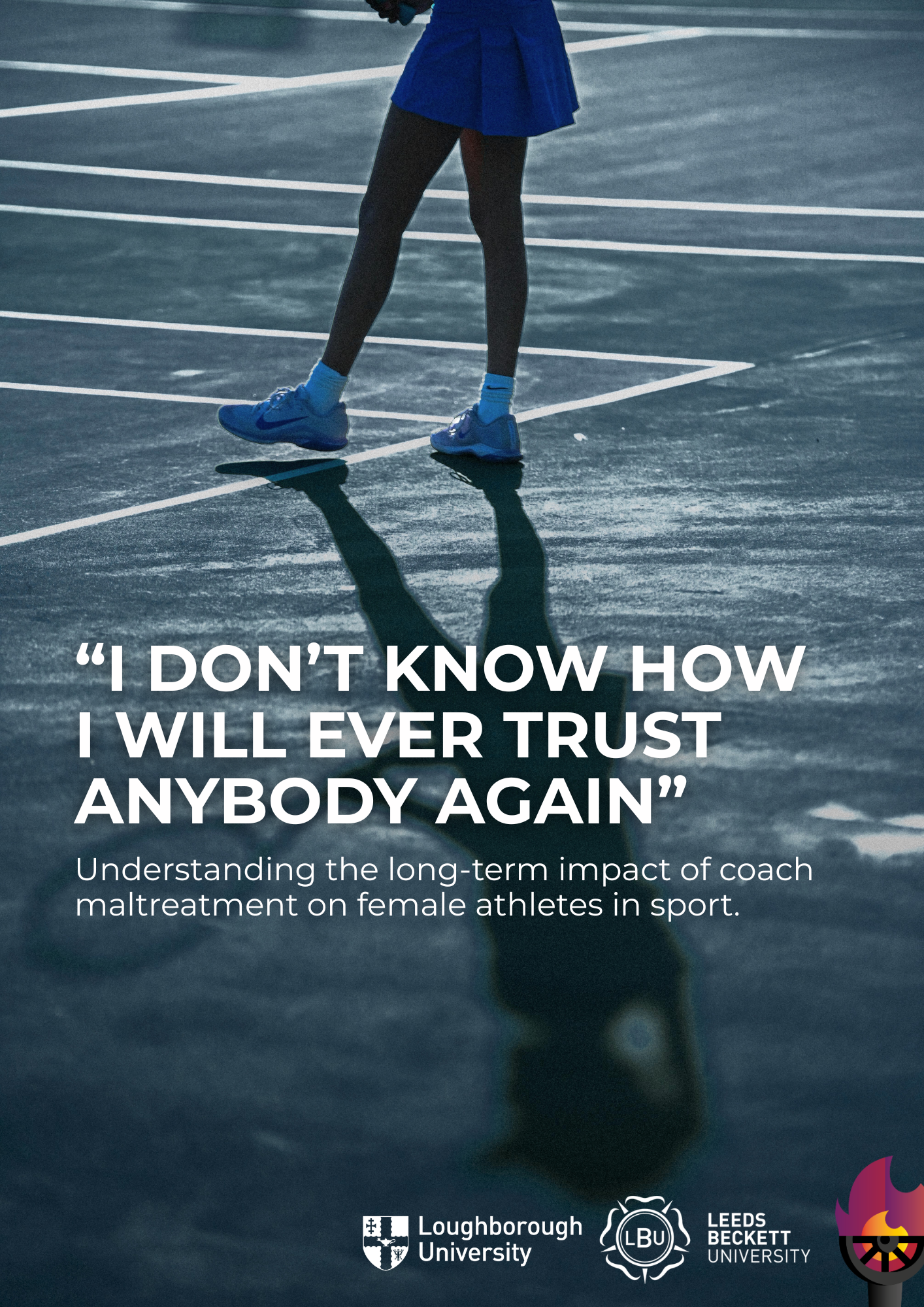
New report: “I don’t know how I will ever trust anybody again”
Understanding the long-term impact of coach maltreatment on female athletes in sport.
(London, 3 June 2026) Kyniska Advocacy, Leeds Beckett University, and Loughborough University today publish groundbreaking research revealing the long-term impact of coaching maltreatment on women who have competed at the elite level in UK sport. The report, "I don't know how I will ever trust anybody again", is the first of its kind to tell the stories of what happens to women survivors of coaching abuse after their sporting careers end. The findings demand urgent action from governing bodies, policymakers, and performance sport organisations.
Drawing on in-depth, trauma-informed interviews with eleven former elite female athletes across six sports, the research documents six overlapping forms of maltreatment: emotional abuse, manipulation, ethical maltreatment, physical harm, discrimination, and sexual abuse. It shows that this harm does not remain within the boundary of sport. The abuse experienced by athletes reshapes every aspect of survivors' lives, for years, sometimes decades, after they leave.
“I went from being mentally healthy to ill. The coach’s constant berating made me develop an eating disorder. The whole ordeal was emotionally and physically draining.”
- Athlete testimony
“Letting my guard down is a real challenge, I assume everyone is out to hurt me."
- Athlete testimony
What the research found
Participants experienced Complex PTSD, chronic anxiety, depression, and eating disorders, symptoms that often went unrecognised for years and were triggered only by life transitions such as parenthood or career change. Relationships were profoundly fractured: the deliberate isolation engineered by abusive coaches did not dissolve when the coaching relationship ended but reconfigured survivors' ability to trust in professional, social, and intimate contexts for years afterwards.
Many participants described a complete estrangement from sport, a domain that had once been central to their identity and joy. Several said they would actively discourage their own children from pursuing elite sport. And every financial cost of recovery (legal fees, private healthcare, lost sponsorship) was borne entirely by the athletes, not by the institutions responsible for their welfare.
“When I reported my coach to the NGB, they told me they’ve known about him being a problem since the ‘80s.”
- Athlete testimony
The report also exposes the structural conditions that enable maltreatment to occur and persist: male-dominated governance at every level, self-policing institutions with no independent oversight, peer cultures engineered to silence disclosure, and a performance ideology that normalises harm as a pathway to excellence.
Seven recommendations:
Extend sporting organisations’ duty of care beyond the point of retirement
Embed gender-informed safeguarding across all policies, training, and leadership
Restructure talent and performance systems to reward ethical, athlete-centred coaching
Centre survivor voice, through trauma-informed advisory panels, as a core principle of safeguarding reform
Establish a dedicated, independently administered survivor support fund
Fund specialist, long-term trauma-informed services for former female athletes
Prioritise prevention: ring-fenced safeguarding funding, RSE in schools, extended ‘positions of trust’ legislation to age 25
“We already knew the harm was happening. What this research shows, and what has been invisible until now, is what it costs women for the rest of their lives. The sport system causes this harm, and the sport system must pay to fix it.”
“This research shifts the conversation from incident response to systemic accountability. The long-term impacts documented here are not incidental, they are the result of structures that have consistently prioritised performance and reputation over the safety of women athletes.”
- Kate Seary, Co-founder and Chief Policy Officer, Kyniska Advocacy
"This research shows that the effects of coaching maltreatment do not end when an athlete leaves sport. For many of the women in this study, the impacts continued for years and, in some cases, decades, affecting their mental health, relationships, sense of self, and trust in others. What is particularly striking is that many only fully recognised the harm they had experienced once they had retired and gained distance from the high-performance environment.
The findings challenge us to think beyond individual incidents and individual coaches. They point to the importance of examining the gendered cultures, structures, and power dynamics that allow harmful practices to become normalised. Safeguarding cannot begin and end with incident management. If sport is serious about athlete welfare, it must place prevention, accountability, and long-term support at the centre of its approach."
- Professor Leanne Norman, Loughborough University
Read the full report: ‘I don’t know how I will ever trust anybody again’: Understanding the long-term impacts of coach maltreatment on female athletes in sport.
If you only have 5 minutes: Download our infographic